Religious Racism
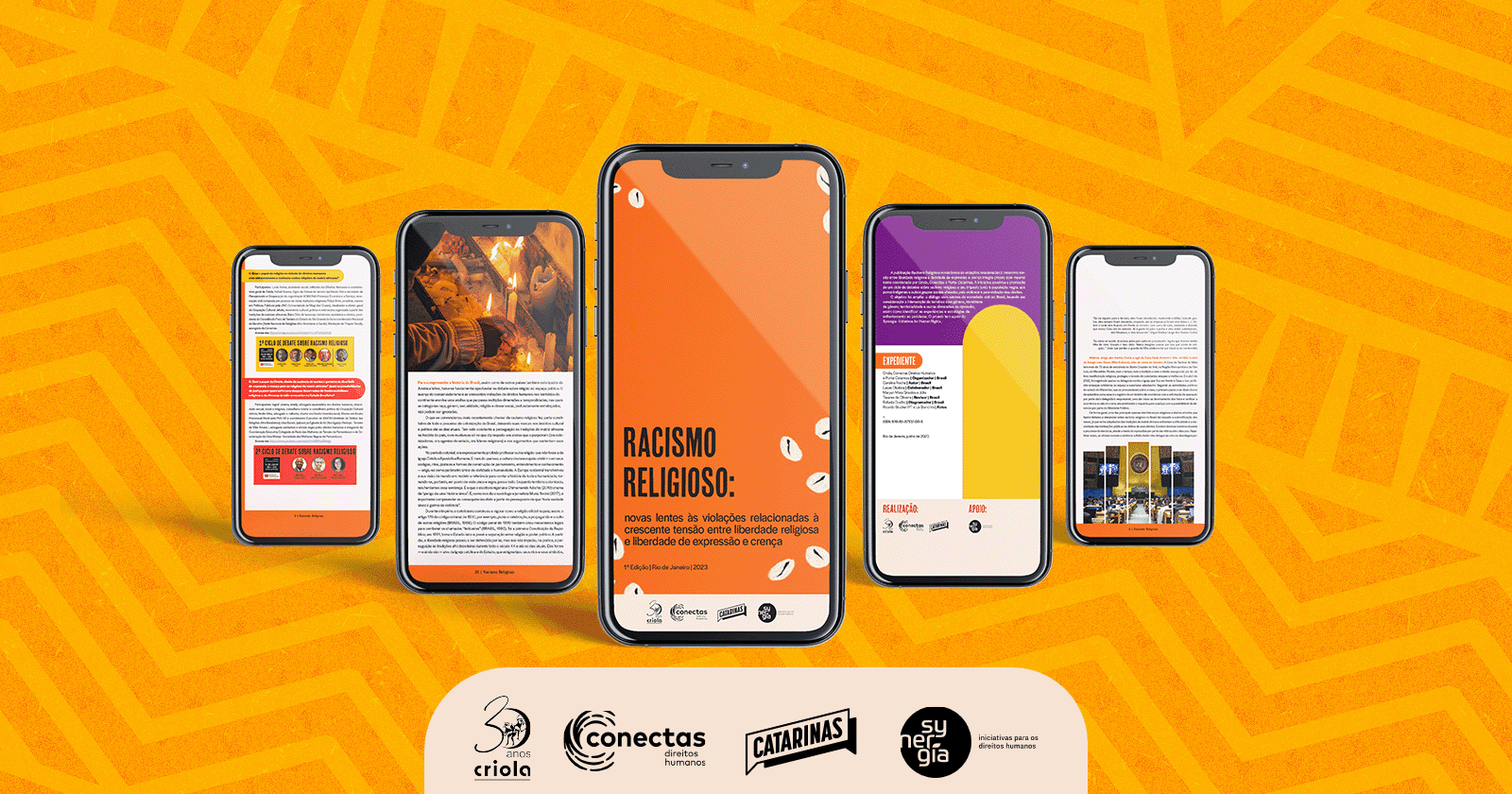
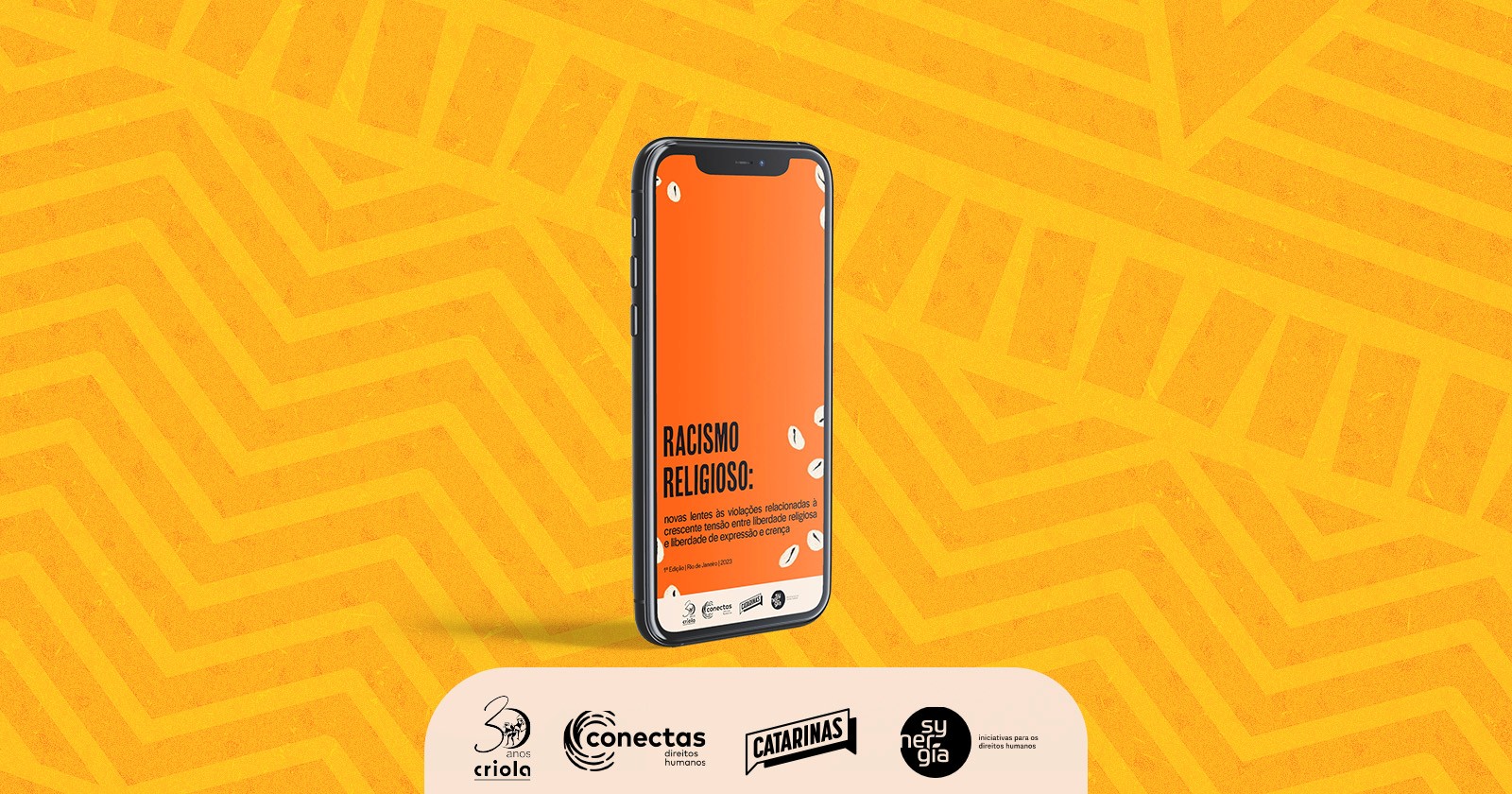
Visual identity, editorial design and communication system for an e-book produced by Criola, Conectas Direitos Humanos and Portal Catarinas, a free publication on religious racism and violations against African-rooted religions and Indigenous peoples in Brazil.
Category
Social Media
E-book
Client
Portal Catarinas · Conectas Direitos Humanos · Criola
Date
In 2023, Criola, Conectas Direitos Humanos and Portal Catarinas launched the e-book “Racismo Religioso: novas lentes às violações relacionadas à crescente tensão entre liberdade religiosa e liberdade de expressão e crença” (Religious Racism: new lenses on violations related to the growing tension between freedom of religion and freedom of expression and belief), a free publication that brought together more than ten experts to argue for the term “religious racism” instead of “religious intolerance”. It covered everything from the persecution of Indigenous traditions in northern Brazil to arson attacks on sacred spaces of African-rooted religions and the loss of custody of children initiated into these religions.
Challenge: Create a visual identity that honored the seriousness and complexity of the subject without being heavy or inaccessible: a free publication meant for all of civil society had to be both dense in content and visually inviting. The design needed to carry the political weight of the topic without intimidating those who didn’t yet know the debate.
I developed the complete visual identity, the e-book’s editorial design and the entire online and offline communication system, including social media materials and YouTube covers for the debate series that gave rise to the publication. The visual language was built to reflect the intersectionality of the subject: race, religion, gender and territory appear together, without hierarchy.
Deliverables:
Visual identity · E-book editorial design · Social media materials · YouTube covers · Offline materials
The e-book was published for free by Conectas Direitos Humanos and Portal Catarinas, circulating among civil society organizations, researchers and the general public. Conectas is one of Brazil’s leading human rights organizations, and having a project published under its name is a meaningful institutional reference.